
Getting to know the Built Environment Collaborative
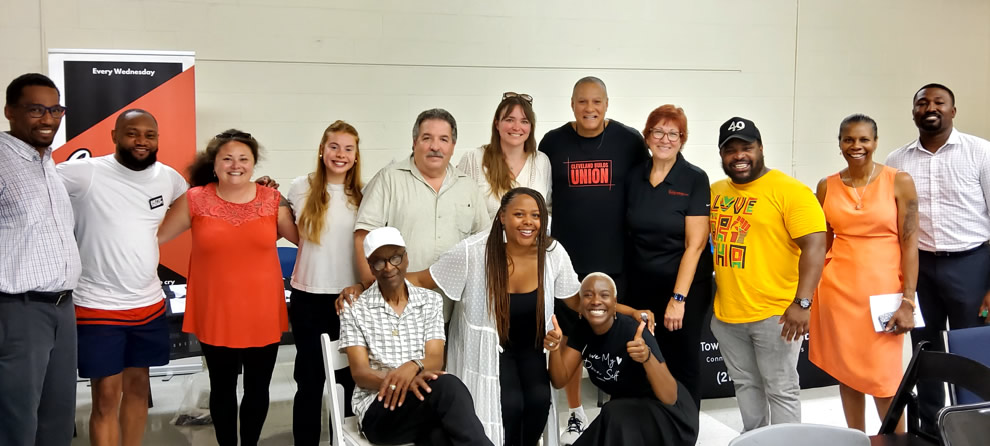
by Danielle Crawford
Deaconess Foundation is excited to speak with Renee Timberlake, the Director of the Built Environment Collaborative (BEC) at the Cleveland-Cuyahoga County Workforce Development Board (WDB). Renee is deeply passionate about advancing equity in the building trades, especially for communities that have been historically underrepresented. With a focus on creating accessible career pathways and fostering inclusive opportunities, she brings a dynamic vision and a wealth of experience to this role. Interested in more information about the BEC? Reach out to Renee Timberlake at Renee.Timberlake@jfs.ohio.gov.
- What inspired you to take on the role of Director of the Built Environment Collaborative, and what excites you most about this opportunity?
I was inspired to take on this role for several reasons. First, I am excited to work with Michelle, who has a clear vision for the WDB and is an exceptional leader. The role at BEC felt like an opportunity to engage in meaningful, on-the-ground work with tangible impact, where success is measured by clear metrics and challenges are understood. I’m particularly passionate about helping historically underrepresented groups, such as Black individuals and women, enter the building trades, which offer excellent career pathways with living wages, benefits, and long-term security. Additionally, I’m thrilled to be part of the team managing a $1 million barrier removal fund, designed to help trainees overcome obstacles like childcare, transportation, and essential work gear, ensuring they can successfully complete their training and embark on these promising careers.
- What is the mission of the Built Environment Collaborative, and how does it aim to impact the local community?
The Built Environment Collaborative (BEC) aims to have future infrastructure projects in Cleveland built by Clevelanders. The primary goal is to enroll in 3,000 new people in training in all the training programs and apprenticeships which enable people to develop our “Built Environment”, whether that is carpentry to build homes and buildings, or building our tree forest, or building roads and bridges. Our goal is for 65% of trainees to be Black, 13% Latinx, and 30% women, reflecting the demographics of the City of Cleveland population while setting realistic targets for increasing women’s representation in the construction trades. By the way, funding for this collaborative was provided by the City of Cleveland Mayor and City Council through one-time funding for COVID recovery called ARP funds.
- Can you share a success story where the Collaborative’s efforts significantly transformed Cleveland? What lessons were learned that could be applied to future projects?
Funding began distribution in October 2023, so while it’s early to measure significant transformation, initial progress is very promising. The Collaborative is expected to place 800 additional Clevelanders into jobs that pay above a living wage, positively impacting not just the workers but also their families. This initiative is set to boost the economic income of the City of Cleveland, bring in more tax revenue and increase spending in the community. Courtney S is an excellent example of the impact that the Collaborative is having on the local community. Thanks to BEC funding to Cleveland Builds, the organization was able to significantly expand operations increasing the number of trainees they served. Courtney was one of those trainees. As a justice-involved young woman, Courtney faced significant barriers to employment until she came across the Cleveland Builds program. She completed the training and through Cleveland Builds strong connections with local unions, is now a first-year apprentice with Iron Workers Local 17. She says “It is solely because of them [Cleveland Builds] that I now have an exciting and a very rewarding career that I absolutely love… As a justice-impacted woman I did face a couple of different barriers but that didn’t stop Cleveland Builds one bit from helping and encouraging me… I truly love being an iron worker and I’m very proud of what I do.”
- What roles do innovation and technology play in the Collaborative’s vision for the future of Cleveland’s built environment, and how are you positioning the city to be a leader in urban design?
The BEC and the WDB are actively engaging in innovative projects like Solar for All and the Site Readiness Fund, focusing on preparing workers for emerging fields such as thermal installation, geothermal power, and EV charging stations. BEC is offering training to help workers expand their skills and adapt to these new opportunities. This forward-thinking approach, combined with a unique trainee fund that addresses barriers to entry, is setting Cleveland apart on a national level, particularly in workforce development tied to urban design.
- How does the Built Environment Collaborative approach equity and inclusion in urban development, and what measurable outcomes are you striving to achieve?
In this role, I will focus on evaluating key outcomes, such as the wage increase from program enrollment to job placement, and emphasize the importance of wraparound supports at all stages of employment including once employed. With a $10 million investment, the goal is to demonstrate a strong return on investment for the city through wage growth and poverty reduction, particularly among Black and Latinx participants who are underrepresented in the construction industry. The BEC is also working to ensure that work environments are welcoming to all, especially as the industry is predominantly white and male. Additionally, the BEC is collaborating with minority and female business enterprises, helping them scale and specialize, making them more competitive in securing contracts and contributing to a more inclusive economic landscape.